mezcal

Showing posts with label mezcal. Show all posts
Mezcal Vago Part II - Tio Rey

July 27, 2016

Mezcal Vago Part II - Tio Rey

Mezcal Month continues here on SmokyBeast with part two of Jake Cahill's piece on Mezcal Vago...  (we'll be back to whiskey in August!)

Alright Alright Alright. Next up for this lovely month of Mezcal madness we're continuing with the imports from Mezcal Vago. Last week we met their original mezcalero Aquilino Garcia Lopez. Today we get to meet another of Vago's sources for their excellent mezcal, Tio Rey.

Maestro Mezcalero Salomon Rey Rodriguez 
(Tio Rey)

Photo by Joanna Pinnero

Tio Rey is doing things in the most old school of ways. He is located in the region of Sola de Vega where almost all of the Mezcal is distilled on “Olla de Barro” clay pot stills. The region itself also sits at just under 5,000 ft above sea level and is quite remote. Tio Rey's family can trace its mezcal lineage back hundreds if not a thousand years. Way up in the mountains, Rey cultivates over 15 different types of agave. Which is easier than it may sound since Sola de Vega has the most agave diversity in the world! 

Photo by Joanna Pinnero


Tio Rey's palenque is on his ranch where he lives with his family. He produces solely for Mezcal Vago (he had never before produced mezcal commercially). He makes for them a Tobala en Barro and his most famous distillate the Ensamble en Barro. Ensamble means that there are numerous types of agave in the spirit. A blend if you will. Tio Rey's batch sizes are always super small. The largest I have seen to date is around four hundred liters and the smallest was only sixty-eight liters!

All agave is one hundred percent hand harvested and dragged down to the Palenque. It's cut into pieces by axe and machete and roasted together, fermented together and distilled together for his field blends, he does not blend batches post-fermentation. The agave is roasted for only two to three days. Roasted agave is ground by hand with wooden mallets/sledgehammers. It's literally put one piece at a time on a wooden platform and pounded down by wooden hammers. I guess they feel that a donkey-pulled stone wheel is just too high tech.

Photo by Joanna Pinnero

The agave juice is fermented in one of his four vats. One of which is almost 100 years old and was carved out of one solid tree trunk from a pine tree into the shape of a giant agave filled canoe. Crazy!! He distills in a series of clay pots that hold only 45 liters each. Just for perspective, from my understanding this whole process takes about 4 times the amount of time and work as it would if he had a stone ground Tehona or if he used copper pots.

Photo by Joanna Pinnero


Tio Rey never adds a drop of water to his mezcals and all are filtered through the same sediment system as Anqilinos just before bottling. Ok so now we know how much incredibly hard work goes into these mezcals. And truly I am blown away by the tradition and lineage of both these producers.

Photo by Joanna Pinnero

Ensamble en Barro
Agave: 58% Espadin 18% Mexicano 15% Coyote 9% Arroqueno  ABV: 51.4%

Nose: Again, go for a more open glass if you can. I am drinking out of my Hicara now for this one because it was too intense out of a glencairn. Everything about this just smells more full bodies and much dirtier. In a good way. Pine needles and mushrooms with a damp smoky earth in the background. Mole chocolate and orange belle peppers. Its really interesting on the nose with a lot happening here. Smoke is subtle and deep.

Palate: There’s that burn again. Similar to the espadin this ABV is just a bit distracting at first. Once that clears out though there is a lot of fun stuff going on here. Super earthy and quite viscous. Charred cinnamon and chestnuts. Acorn squash on a grill. Blue corn tortilla and mushrooms. Cured smoked meat. Really wild stuff here.

Finish: After the burn fades, the earthiness just clings all over your palate and hangs out for quite a while. My taste buds are trying to catch their breath from the high proof but at the same time want more earthy mezcal goodness. Like when a cigar gets too damp at the end of a long smoke.

Verdict

This Ensamble is really unique. You can get all the earthiness and texture and oil from the long and arduous production process, but again its just too over powered by the proof. It abuses and pleases the palate at the same time. Like the Ike and Tina of mezcal. I love that this is such a break from the fruity and smoky sweet mezcals though. The earthiness and full bodied nature make this more of a food mezcal in my mind. Or a mezcal for a cold wet night. But if I had to drink this at proof, I might not buy another bottle. After proofing it down to 47% abv though, this becomes a much more tame beast and a really solid pour.

For both of these the abv was just too high for my liking and really got in the way of the enjoyability of them. And although I assume the gentlemen who made them would disagree with me adding water, I just cant deny the fact that bringing these down a few degrees really helped pull them together. I have had delicious high octane Mezcal that doesn't need a damn thing except my glass. These two were not in that league. However maybe this works in our favor. For the price of one bottle, we can essentially get 1 and a half bottles by proofing it down to 47 each time. There’s always a sliver lining. Love what the folks at Vago are doing and really respect their process, labor and dedication to tradition. I will certainly be revisiting these over time and exploring the rest of their line, although maybe I'll find a pour at a bar before buying a bottle in the future. It may not be what I want to reach for every night, but Vago is very good quality that should hold down at least one spot in your selection. Go for the Ensamble. Its pretty interesting. Oh and the Elote. Try the Elote. Sweet and flavorful and delicious, definitely worth the trip...


Photo by Joanna Pinnero

Till next time.

Cheers/Jake


Thanks for another awesome column, Jake!  Tune in next week as we wrap up mezcal month.
Mezcal Vago Part 1 - Mezcalero Aquilino Garcia Lopez

July 20, 2016

Mezcal Vago Part 1 - Mezcalero Aquilino Garcia Lopez

We hope you're enjoying Mezcal Month here on SmokyBeast. Here's part one of another great piece from our resident mezcal maniac Jake Cahill!
Mezcal, real, true and traditional mezcal, is not something you can talk about without mentioning where it comes from, the people who make it, and how it makes its way into our hands. Vago is a producer that should be quite familiar to Mezcal fans here in New York and quite a few other states in the country. Although the production for these guys is quite small, their reach is long and impactful.

Vago has, for lack of a more eloquent phrase, so much cool shit about them. Now we aren’t even talking about the mezcals themselves yet. I am talking about everything from how they were started as a brand, the two main palenque they work with and how long they have been doing this, how old school their operation is and all the way down to the paper they use on their labels. Too much to cover but I’ll start with a quick blurb about how the brand was started. Then go into the Mezcaleros and their operations and finally the tasting notes and verdict on a few of their most well known Mezcals.


Mezcal Vago

It all starts with a lovely age old story of two gringos wondering around Oaxaca looking for a good time. Gringo #2 gets handed a gasoline can full of Mezcal randomly in the street! He drinks it and loves it! Gringo ends up in a hospital somehow years later (unrelated to Mezcal). Gets fixed up by a beautiful local girl who is very much not a gringo. Gringo falls in love with her at first sight. Gringo gets his ass kicked for her love because she was vowed to another. She falls in love with the Gringo. Gringo goes to meet the Family! Fears for his life meeting her father. Father turns out to be an amazing and well respected distiller of Mezcal! Gringo falls in love with mezcal as well as his new bride and decides that the world should taste how good his distillate is! Mezcal Vago is born and a Gringo becomes a loved part of the family. (This is very condensed and possible slight miscalculations but I was told the story once and had a lot of mezcal when it was told to me so…)

All palenque photos courtesy of Mezcal Vago

Maestro Mezcalero Aquilino Garcia Lopez

At current time there are 2 Mezcaleros producing for Mezcal Vago and each has a very very different style and process. Aquilino is the father from the story above. He has had mezcal in his life since birth. And so has over 5 generations of his family. His great great grandfather started distilling Mezcal in the Mid 19th Century and has passed that tradition down to every generation since. He produces most of the mezcal in the Vago range including the Espadin, Mexicano, Cuixe and the Elote (which is a Maize infused mezcal, which is delicious). His Palenque is located on his ranch where he and his family live. He and his son Mateo do pretty much all of the work themselves. From the flowering and mating process of the agave, to the cultivation and care of the plants as they mature all way up to harvest time and production. 

They are located in Candelaria Yegole (same area as Rey Campero from last week), so its very fun to see just how different the hands of the Mezcalero influence final product if you do a side by side of these two producers. Aquilino and Vago are very aware of the footprint they have on the earth so they re-plant agave and nursery as often as possible and make sure nothing goes to waste. The labels on the bottles are actually made from left over agave mash which they boil and mash together and dry out into sheets of rough paper. Pretty darn resourceful! 


Mezcal Vago ESPADIN

Aquilino's Espadin is harvested between 7-12 yrs old. It's dug up and shorn with a machete, and hand cut into quarters before being roasted in an earthen pit for 3-5 days. Once roasted, it's stone ground. Fermentation happens in old 1200 liter pine vats for about a week as it is left to ferment spontaneously.  Aquilino distills the mash before it has fermented fully dry. So there is a much higher sugar content in his mash when it goes into the still.  Finally it's distilled twice on tiny copper pot stills. All the cuts are made by smell and taste. All of Aquilino’s mezcal goes through a simple sediment filtration through a tubular cellulose filter before bottling. This is the only thing that happens to the mezcal between distillation and bottling.


Tasting Notes

Nose: Holy Crap. Ok folks if you have this in a glencairn glass, do not dig your nose in too deep. Transfer this one over to a rocks glass if you can so it can really open up and not focus the aromas. The alcohol is very intense. Once its opened up though, this is really fun to smell. Roasted marshmallows, sweet potato, citrus and gunpowder with some sweet grilled pineapple coming through and just a bit of burnt rubber in the background.

Palate: Again the alcohol is super intense and dominates the first sip or two. Once my palate (and apparently thigh high skirt) adjusts, the flavors start to shine through a bit. Sweet potato comes back with the addition of anise and vanilla. There is a slight herbal character to it like pine or sage. And a distinct caramel note.

Finish: Burn baby burn! It leaves you breathing out through your mouth like you just took a bite of food that was a little to hot but you didn’t want to spit it out in front of your date. When this dissipates however there is a really nice texture. Like burn ointment after you forget to use an oven mitt. Its soothing and cooling almost minty or aloe which is needed after all that proof.

Verdict

I usually do pretty well with high proof stuff. This is by no means the highest proof Mezcal I have had and the others were beauteous. This is a bit clumsy for me and just too overwhelming at its proof. I want to like it so badly out of the bottle but I just don’t. The alcohol is too distracting from all the nice flavors trying to sneak past the burn. HOWEVER! I have never put water in my mezcal before. But I did with this guy and had a second go round at it. The water helped immensely with my enjoyment. I know they wouldn’t do it and I hate to even insult them the slightest bit. But proofing this down to about 47-48% really made this much better for me. All of the flavors were free of their chains and there is a wonderfully subtle oiliness to it that I didn’t feel at full proof. The smoke is soft and sweet and really tasty. So basically, out of the bottle this Espadin is high octane and a bit distracting. But a little bit of water and this became a very enjoyable mezcal that I will have again. Not my favorite but very good. Each batch is different too so I will have to try another one down the line and report back.

Cheers/Jake


Tune in next week for Mezcal Vago part II - Tio Rey!
Mezcal Month Part 1: Rey Campero!

July 12, 2016

Mezcal Month Part 1: Rey Campero!

July is Mezcal Month!!  Here's the first installment from our resident Mezcal expert, Jake Cahill, a wonderful piece about Rey Campero mezcal, a traditional Palenque in Oaxaca, Mexico.  Enjoy!

A Word About The Importer

William Scanlan is a gem. A prophet sent to us from Mayahuel herself with a great responsibility, nay pleasure to spread the word to the world about the wonders, traditions and beauty of mezcal to all of us. He is not a distiller, however he is the reason that we get access to this wonderful brand of mezcals that have been made traditionally in Mexico for a very very long time.


Rey Campero

Rey Campero is one of the few mezcals sold here in the US under the original Mexican name. Most imports are rebranded and lose valuable information about the crop and location, or "terroir", which is so important in mezcal. Rey Campero translated means “King of the Countryside”. This family has a LONG history of producing mezcal. In 1870 the family moved to a little community named Candelaria Yegole (75 Miles from Oaxaca city) and established that communities first ever Palenque (distillery). That’s over 145 years of making mezcal!!

The Brand currently sells 7 different expressions in the states. Only 2 of those are made from cultivated agave. The other 5 are all made from wild "Silvestre" agave that grow in the countryside. Each different bottling represents the name of the species of agave that's used in the mezcal: Espadin, Madre Cuishe, Cuishe, Tobala, Mexicano, Jabali and Tepextate. The plants are hand-harvested at maturity after growing anywhere from seven to eighteen years.

Process

The agave is roasted in a conical earthen pit for four to five days over a fire of fallen branches and wood found floating in the local river. It's then rested 5 days prior to milling. The milling is mule-powered (yup, mule-powered!) with the animal towing a traditional stone wheel called a Tahona around in a circle to grind out the pulp. The juice is then open-air fermented in pine vats with wild yeast. The process is completed with double distilled on hand-made copper stills and the product is bottled at full proof.

Conservation

Rey Campero is committed to the conservation and care of wild and cultivated agaves. Due to its popularity in mezcal production, the Mexicano (Rodacantha) agave is teetering on the edge of extinction. In 2013, Rey Campero planted a nursery of approximately 8,000 bulbils of the Mexicano. These 8,000 agaves were transplanted during the first rains of 2014. In 2014 Sanchez planted 10,000 additional bulbils of the same agave to be transplanted during the first rains of 2015. Then they kicked off 2015 by expanding their nursery to facilitate the planting of 5,000 more bulbils of Mexicano, 3,000 seeds of Cuishe (Karwinkski), and 1,500 seeds of Tepextate (Marmorata). They will also study the reproduction of Jabalí in order to begin planting these plants in 2017. Beginning in 2017, their goal is to increase the amount of agave planted by fifteen percent every year, for the next ten years. We, not just as lovers of Mezcal but also as decent human beings, need more people doing things like this. 

Tasting Notes


Rey Campero Espadin
Varietal: Espadin cultivated 6-7 years
ABV: 48%
Produced October 2014
Bottle 1435/1678


Nose: The Nose is charged. Really aromatic. Fruity and smoky. Pineapple and white flower with the most subdued and integrated smoke. It’s characteristically very similar to sticking your nose into a glass of Alsace Gewertztraminer for all my winos out there. Its bright and tropical. Flowery and spicy. But there is this unshakable acetic smell. Like nail polish remover. In a good way though. Like how we enjoy the smell of gasoline as we fill our cars up at the station.

Palate: On the palate, the weather is exactly how the nose predicted the forecast. Super ripe tropical fruits and flowers mingle nicely while the smoke intensifies to be a bit more charred than it was on the nose. A delightful addition as opposed to a distraction (as is the case will all the best mezcal, smoke is an additional flavor but not the only one). A green note finally slips in too. Cucumber and Green Pepper. The texture is also really appealing for me too, rich and oily but light on the palate because of that fruity and ginger spicy edge. Same slight acetone/nail polish-y thing here too.

Finish: The finish is long and absolutely delicious. That oil coats your tongue and rises to the top of it as if it were separating from vinegar. Grilled pineapple with ground ginger and a neighbor grilling in the summer all linger and slowly fade off leaving my mouth feeling lonely but satisfied. Time to refill my cup and start again!


Rey Campero Mexicano
Varietal: Mexicano (wild) harvested at 10-12 years old
ABV: 48.4%
Produced October 2014
Bottle 195/954


Nose: Hell yea this smells great. Slightly green upfront with beautiful vanilla and cinnamon peaking through. Lots of baking spice coming though actually. Clove and cracked pepper. Very floral as well. Can't pin down the exact botanicals but they are delicate and pretty. Hint of soft smoke covers everything ever so slightly.

Palate: The palate is round and supple yet really exciting. Its hard to focus on one thing at a time because there is so much happening. Its like a bunch of really great jazz musicians jamming but for very short bursts of time. A little trumpet, then you catch a second of the bass just before the sax lays into a roll but all the while you hear the drums laying down the beat in the background. It’s a pleasant chaos of lavender and rose pedal, campfire and chocolate. Green pepper and olive oil. The flavors AND texture of clove being ever present. It all swirls around in a confused but happy balance.

Finish: The finish is long and quite dry. The oiliness from the palate dissipates fast and the dryness really takes over. Spicy and woody. A great but abrupt halt from all the madness of flavors from the palate. Very interesting. Like an episode of LOST, it kinda leaves you hanging and wanting more. Really like this Mezcal. Quality and super interesting. 


Rey Campero Tobala
Varietal: Tobala 13yrs (Wild) harvested at 6,000 ft in San Pedro Martir
ABV: 48.5%
Bottle 61/893


Nose: Now we are talking about some aromatic robust goodness. The nose is filled with spices and tropical fruit. Mango and pineapple smash together with a burning campfire. Oh its like smelling Puerco Al Pastor down the street. When that roasted pineapple juice drip’s down the cooked meat. Dee-lish!

Palate: Big and complex. The leading force here is the tropical fruits again, but some baked apple pie comes in. Salted caramels and clove and paprika. Smoked paprika! Great balance of smoke and florals. White peach. Really beautiful and full bodied on the palate. Texture coats and helps add nuance to the flavors big time. That slight bit of acetone that I get from their Espadin creeps back in a bit towards the end here. But in a good way.

Finish: Oily and coating at first and then dries off leaving this lingering smoked fruit hanging around for quite some time. This is the more full bodied of the three which is funny because the Tobala agave is way smaller than either Espadin or Mexicano. All that concentration of flavors and power in such a small package. This is the one you want if you’re eating with your Mezcal. Damn good.

Review

All of these Mezcals are bottles I would happily buy again. You can start with Espadin and work your way up from there, but I would rather spend the extra $40 dollars or so to get any of the wild agave expressions. When I get that soft elegant touch from the Mexicano or the bold and wild flavors from the Tobala, there's no doubt it was worth digging a touch further into my pocket.

Dixeebe and Cheers!  /Jake
Return of Jake's Mezcal Column!  Nuestra Soledad: La Compania Ejutla

February 11, 2016

Return of Jake's Mezcal Column! Nuestra Soledad: La Compania Ejutla

Well since it's negative ten degrees out, let's live vicariously through the temperate winters of Mexico with another of Jake's awesome mezcal reviews. 


Nuestra Soledad: La Compania Ejutla
2013 Edition 4
Bottle # 326/1120
47% abv 
100% Espadin 
Distillery (Palenque): Los Bigatones
Master distiller: Gonzalo Hernandez

Nuestra Soledad is another wonderful brand that is delivering us with a true slice of Mexican tradition via its wonderful artisanal mezcals. They are working hand in hand with traditional mezcal distilleries (Palenque) throughout various villages within Oaxaca. The four different villages these bottlings come from are San Luis del Rio, San Baltazar Guelavila, Santiago Matalan and La Comania Ejutla. Their goal with this brand, aside from providing us with some damn fine mezcal, is to showcase the versatility of mezcals made solely from the Espadin variety of agave. As mentioned in an earlier post, Espadin is the most commonly cultivated agave for mezcal production thus responsible for most of the mezcals on American Market today. 

By working solely with Espadin for their bottlings, what other factors could possibly change the way a mezcal smells and tastes? Well, if you have been reading the blog so far you will know this is a silly question because there are so many influences on the final profile of a mezcal. Remember there are no stupid questions. Just really silly ones. Age of the cultivated agave, the different soils and elevations of each village, the method and duration of smoking the Pina, the water source used during production and during proofing, the fermentation method and length and the distillation method are really just a few of the factors that can affect the final profile of a mezcal. This becomes way more apparent when you are fortunate enough to taste mezcals side by side. Even if not side by side, the more often you drink mezcal in general you will notice differences and nuances from bottle to bottle. What I am saying is that you need to start drinking more…Slackers.

And that’s why I think the Nuestra Soledad line up is going to be very important to the development of mezcal in the states. I believe that you should taste all of their bottlings (really not to hard at 40-50 dollars a bottle) and see for yourself the stylistic differences between each village’s mezcal. Or find a really great Mezcal bar and ask them to pour you a flight so you can do the side by side without committing to a full bottle of each. Make it a competition. Taste them all, then pick which one you like the most. My favorite spots (aside from my own living room) to go enjoy a mezcal right now are Mayahuel in NYC and Leyenda in Brooklyn. This particular bottle was enjoyed at Leyenda BK last week. A Wonderful cocktail bar with a pan Latin influence and one of the best (and well priced) little mezcal lists around. The spirits list is literally a leather bound book. Ron Burgundy would approve.  


This Bottle is the Latest release of the La Compania Ejutla. Grown and Distilled by brothers Gonzalo and Gregorio Hernandez, it was roasted in traditional pits using mesquite and oak and double distilled in copper stills. Together these brothers run a Palenque called Los Bigatones. It is named such because both Gonzalo and Gregorio have mustaches of biblical proportion that would put even the most outlandish of Williamsburg hipsters to shame. 

Gonzalo Hernandez (Master Distiller) with Asis Cortes at Los Bigatones distillery
(Photo by Justin Briggs of Skurnik WIines)


Their Palenque is beautiful and hand worked by them and their family who have been doing this for generations. At about 5,000 feet above sea level, the agave sees a wonderful view as it matures and awaits their masterful hands to unearth them and create a beautiful spirit for us to savor and enjoy. I mean really, they make it for themselves and their loved ones and for people of the local area. We, are just a few fortunate foreigners that get to taste their liquid piece of art. And at only 1120 bottles for this batch, it truly is a limited piece of art. So go find a bottle. And share it with friends and family as it was intended by the masterful hands that crafted it.

Gregorio Hernandez with his own personal brand (not in production anymore) Mr. Mustache!

Tasting Notes

Nose: Nice melding of smoke and fresh fruit. Green Apple and Bell Pepper creep past the burnt out campfire smoke. A quick flash of black pepper almost enough to make you sneeze. Vanilla bean and graham cracker find its way in there and a nice pinch of roasted ginger.

Palate: The fruit dances around first only to give heed to the mesquite that finally makes a guest appearance. The smoke is really pleasing and balanced out wonderfully by the other elements. Rosemary and Dried Juniper berries. Charcuterie like speck. An oven roasted asparagus wrapped in prosciutto! Salinity and mineral toward the end but trumped by a sweet vanilla.

Finish: As the Mineral and Fruit taper off, the vanilla starts to come back a bit accompanied by the black pepper and green apple. Spicy ginger and that burnt out campfire leave the last impression as it slowly fades. Good thing my glass is ful….Empty!!! Heavy Sigh
Verdict: Very nicely balanced and wonderfully expressive for an affordable mezcal. Made with love and mastery which really is quite evident right away but even more so as you spend some time with this. Cant wait to explore the whole line and see what batches keep coming our way.


Cheers and Dixebee!!   /Jake


Vida San Luis Del Rio (Mezcal Vida) - La Bestia Ahumado

December 22, 2015

Vida San Luis Del Rio (Mezcal Vida) - La Bestia Ahumado


A few weeks ago we introduced Jake Cahill our new Mezcal reviewer.  Here's Jake's first post and our first official segue into reviewing a brand new type of smoky beast, La Bestia Ahumado if you will :_)...


The Ramble

Now this is where everyone’s mezcal life should start! Mezcal Vida is made by the incredible folks over at Del Maguey. This is where my mezcal journey started a couple years back and if you haven’t had the pleasure of mezcal entering your life yet, then you should certainly find a bottle of this and make it your first experience. This mezcal is a staple at any home bar. Well, really it’s a staple for anywhere mezcal here in the states is respected. Any bar with a great cocktail program just knows that Vida is the jam and if a retail store has only one mezcal, chances are, it’s Vida. And there is good reason for that. This is the most versatile bottle of mezcal I have come across to date. It is a beautiful showcase ingredient in any well crafted cocktail (Replace tequila with mezcal in your favorite margarita recipe to see just what I’m talkin' about) or the perfect little sipper for any time of year. Hell even any time of day. We won’t judge!

Vida has all the citrus and fruitiness you want in the summertime, but the smoke and oily texture to warm you on a chilly evening. All of this quality comes at no surprise given Del Maguey’s pedigree since hitting the states in 1995. But here is the best part! Mezcal Vida wasn’t introduced by Del Maguey until around 2010. For 15 years before its “Entry Level” label of mezcal was released, Del Maguey were specialists in importing Single Village mezcals. We are talking extremely limited and premium bottlings of mezcals made in tiny villages by extremely small distilleries (Palenque) the way they have been made for hundreds and hundreds of years. Then, after 15 years of providing us with some of the best mezcal around, they decided to mix up a mezcal that would be more accessible and readily available. Not to mention, much more affordable (most of their single village bottles start around $65 and can easily go for over $100 depending on the bottling). It’s like if Ferrari were to now, after years of building some of the most raw and masterful cars, decide to build an entry level sports car to sell at $40,000 so more of us could have a greater experience for our price restricted lifestyles. But that wont happen anytime soon, so VIDA it is! (Discloser, Do not drive your Ferrari after drinking mezcal. Unless it’s to go buy more mezcal. But even then probably don’t do it)


The Specs

Vida is made from the Espadin species of maguey that is all organic. In the traditional way, it is hand harvested (No easy task as the shaved Pinas alone can weigh around 150 pounds each when harvested for this species). The Pinas are split and roasted with hot stones in a pit dug into the ground. The Pinas and stones are covered with dirt and earth to roast for 2-4 days usually (This is where mezcal picks up its smoky characteristic), then stone ground by a giant wheel usually being pulled by a donkey(or distillers mother in law) to pulverize the pinas into a fermentable mash. After fermentation occurs (2-4 weeks), which is usually sparked using native yeasts in open top clay or wood fermentors, the wash is distilled twice on these extremely small and traditional clay or copper pot stills!

The Revelation

We are talking small operation here. You think American craft distilleries are small sometimes but comparatively; these mezcal guys are the truest of artisans in the spirits world. Not only do they have to wait a minimum of 8 years for the Maguey to mature, they then have to do everything by hand. Computers? Most of these guys don’t even have a landline let alone automated equipment. Plus they are truly dedicated to the preservation of traditions and techniques. They know that good things are worth waiting for and working hard at. 


Jake's Tasting Notes

Nose: Wonderfully aromatic with soft and inviting hints fresh cut stone fruit, spice and roasted agave. Honey and wildflowers. The smoke is subtle like a burnt out campfire from the night before.

Palate: Smoke and Fruit out of the gate. Extremely well balanced texture that coats your tongue with a coconut oil like feel. Fresh ginger and ripe peach with these great hints of chorizo wrapped melon. Graham cracker and slight hints of chocolate and orange zest.

Finish: Little hints of pipe tobacco and baking spice really shine as the fruitiness tapers off. The smoke lingers but in a soft sweet way. 

Steve's (Mr. Beast's) Tasting Notes

Nose:  At first pass you could have fooled me into thinking this was some super smoky Laphroaig moonshine.  It's definitely a beast-lover's dream.  But no, the smoke is different - way more in the fruity direction, like fermenting pineapples.  Given time to open up in the glass, the smoke fades into the background and the floral / vegetal notes come to the front.  Super heavy lavender nose with some olive oil, aloe, and honey. 

Palate:  Wow considering the strong smoky on the nose, it's a very delicate palate and finish.  Tastes very sweet, definitely getting the coconut and peach that Jake picked out.  Also some little hints of hot peppers mingling with the sweetness of the agave.  

Finish:  Considering what you get upfront, the finish is barely even there. A malt with this much smoke would linger in the throat for a few minutes, pleasantly smoldering up your hard palate and ending up in your nose.  This is a short and balanced finish of sweet fruit and flowers with only a hint of smoke remaining on the tongue.

Review
This is seriously some bang for your buck experience here. At an average of $36 this is the cheapest one way ticket to Oaxaca you will ever buy. It is so representative of the agave plant and true to the traditions of the wonderful people who create it. Unbelievably easy to sip and truly stands out in so many ways. I can’t stress enough how much I recommend this being your first experience with mezcal if you have never had the pleasure. Mezcal Vida will always have a spot on my shelf and I am sure it will be a standard for you as well.

Cheers and Dixeebe!!  /Jake
On adultery, of the smoky variety

November 30, 2015

On adultery, of the smoky variety

When you meet someone who's passionate, the passion is often contagious. Such was the case when we met Jake Cahill, whose passion for life and spirits is obvious to everyone around him. Jake currently works at Natural Wine Company and also moonlights at Van Brunt Stillhouse. He's taking on spirits with an awesome combination of seriousness, hard work, and enjoyment.

The danger with passion is that it often knows no limits. Freud described the Id as "a cauldron of seething excitations." After three years of monogamous devotion to whiskey (aside from the occasional flirtation with rum) Mr. & Mrs. Beast were starting to consider committing some adultery and venturing out into other smoky spirits. That's when we received a copy of this drunken missive addressed from Jake to Mezcal. We had found a kindred spirit.

Dear Mezcal,
The truth is, I've loved you since the moment we met three years ago. I saw you at a party and was immediately intrigued. You were so wild and exotic and smelled like perfection. And that accent of yours! But I was deeply involved with someone else. So I hid my feelings and remained loyal to Whiskey. I won’t lie, Whiskey has been true to me and taught me much about the world. I can’t imagine my life without Whiskey and will continue to be with her, but nonetheless you remained on my mind. The brief time we'd spend together, here or there at an industry event, turned into wonderful forbidden tastes of your fresh outlook on life. Your little spicy secrets hinted at a deep, lush culture to be explored.
Since our affair this summer, these last months have been an absolute joyride. I count the days until I see you again. You transport me to another place. You take me to another time. A simpler time. It's become impossible to deny my feelings for you. I want to know everything about you. I want to see you in all of your forms. Your natural beauty when you first wake up. Your polished subtle sweeter side after taking obnoxiously long to get ready. I want to know all of your secrets. I want to stay at home and keep you all to myself. I want to go out and show you off to the world. I want to smell you as I swing open the door leading to my unfortunately peach-walled apartment. I want to post pictures of us together on the internet and take selfies with you. I want to make us official on Facebook. I want to #netflixandchill with you.
Yes, it's true, I'm still in bed with Whiskey. And, yes, yes, you may still see me out to dinner with wine and rum and beer. If loving too much is my crime I plead guilty! So, although it’s true that I am asking you to be a part of my Utahnian Polygamist relationship with wine and spirits, I can promise you that you will be my main squeeze! For the foreseeable future at least...

Drunkenly but Sincerely, -Jake

Well what could we do after reading this but ask Jake if he would join up with SmokyBeast to be our official Mezcal writer??  Please help us in welcoming Jake as our official ambassador to Mezcal! And without further ado, his first post.

Mezcal 101


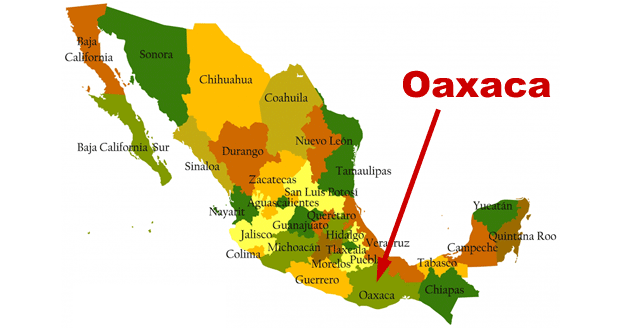
All mezcal comes from Mexico. Specifically, most of the mezcal I will be reviewing comes from the Mexican state of Oaxaca, which lies on the Pacific coast about five hundred miles east of Acapulco and six hundred miles northwest of Guatemala City. These Oaxacan mezcal producers use traditional methods that have been in place since the 16th Century.

Maguey

Mezcal is made from the heart (Pina) of a cactus like plant called agave (Maguey), which when unearthed looks like a really big pineapple. Similar to wine grapes there are many different species of maguey and mezcals can be a blend of different agaves. About 85-90% of mezcal on the American market today is made from a variety called Espadin. 

Production

Traditional Palenque - piña roasting pit (image from Rachel Alexander)

Once the maguey is unearthed, the pina is cooked in pits dug into the ground (called palenques). These vary in size but are on average about 10 feet wide and 6-8 feet deep. The pit is lined with stone to retain heat. A wood fire is started in the pit and then everything is covered with pieces of agave plant and dirt. The pinas will cook in these pits for 2-4 days. The process caramelizes the sugars in the piña and imparts its famous smoky flavor. 

Crushing the roasted piña

Roasted pinas are removed and crushed using a stone wheel which turns the pinas into a pulp like consistency. This pulp is put into a fermentation vat with water and left to ferment naturally or using native yeasts. Fermentation can take anywhere from 2-4 weeks and is usually in large wood or clay vats. This mixture (Wash) is then distilled twice on a copper or clay pot/alembic still. 

Mezcal still

Aging

There are three classifications of mezcal according to the length of barrel aging:

  • Joven means it sees no time in oak or a max of 2 months.
  • Reposado is between 2 months to a year in oak. 
  • Anejo means between 1-3 years in oak.


Stay tuned for a whole series of mezcal reviews from Jake coming soon to SmokyBeast!